
Can My Landlord Enter My Rental Unit in Canada?
Learn when Canadian landlords can enter your rental unit, notice rules by province, emergency exceptions, and what to do after an unauthorized entry.
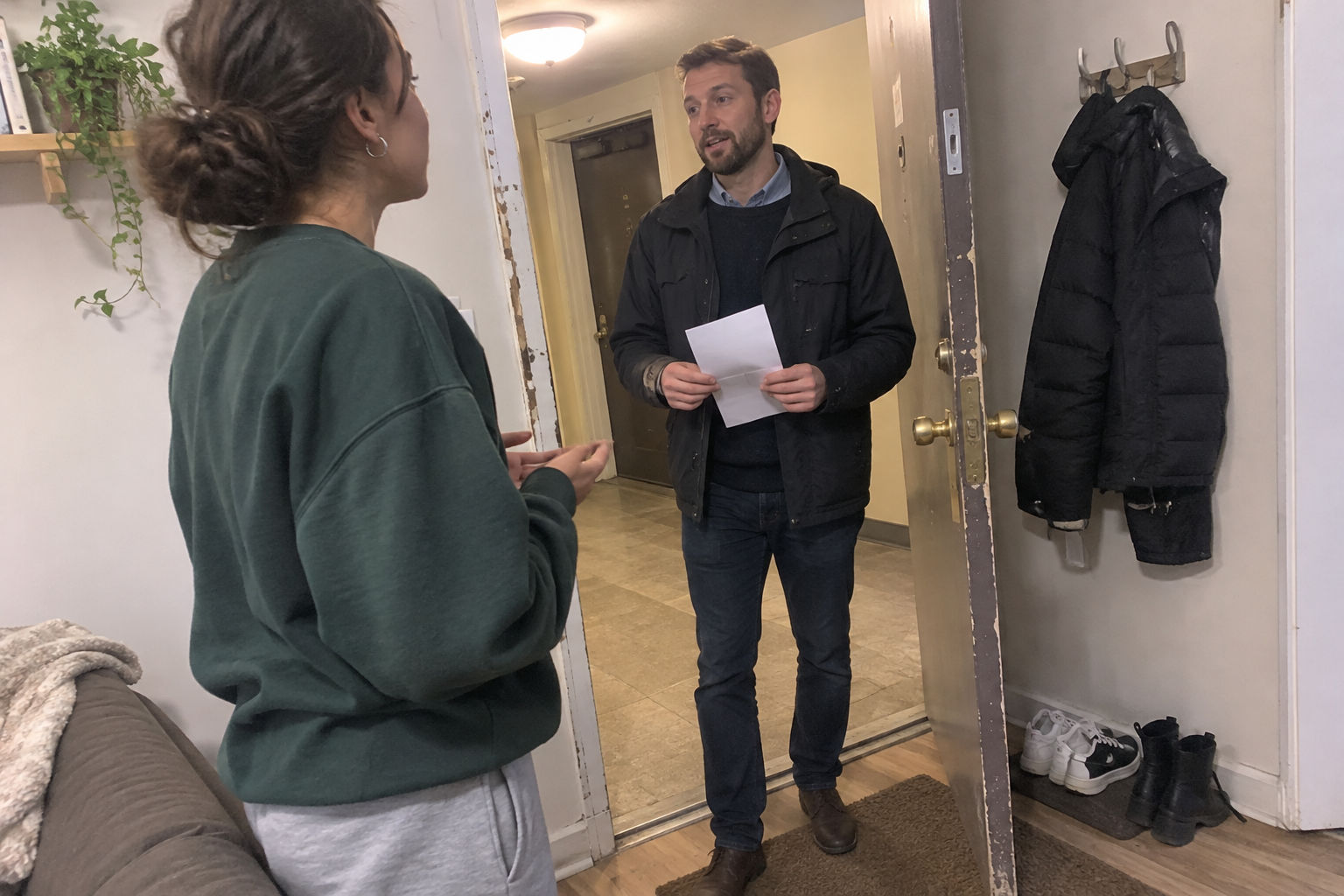
Yes, your landlord can enter your rental unit in Canada, but they must follow the rules that apply in your province. For many routine visits, that means having a legally permitted reason and giving advance notice, often at least 24 hours.
However, there is no single entry rule for every rental in Canada. The notice period, permitted hours, and exceptions depend on where you live and why your landlord needs access.
The key difference is between notice and permission. When a landlord has a legal right to enter after proper notice, they generally do not need your separate approval. But owning the property or having a spare key does not allow them to come and go whenever they choose.
This guide explains when landlords can enter, how provincial notice rules differ, what counts as an emergency, and what to do if your landlord enters without following the rules.
General information only, not legal advice. This guide covers provincial residential tenancy rules. Different rules or exclusions may apply to shared accommodation and other housing arrangements. Territorial requirements are not covered.
When Can a Landlord Legally Enter Your Rental Unit?
Landlords may need access to maintain the property, meet safety obligations, or arrange legitimate visits. Their right to enter is usually tied to a specific purpose, not a general right to check on you whenever they wish.
Common reasons include:
Completing repairs or maintenance.
Inspecting the condition of the rental.
Investigating a maintenance or safety problem.
Arranging pest control.
Showing the unit to prospective buyers.
Showing the unit to prospective tenants when permitted.
Responding to an emergency.
Following a tribunal or court order.
The permitted reasons and procedures vary by province. Even when the reason is legitimate, the landlord may still need to give proper notice and attend during permitted hours.
Entry for repairs and maintenance
A landlord may need to fix a leaking pipe, repair a heating system, or inspect a broken appliance. Routine repairs generally do not erase the notice requirement.
Reporting a problem also does not have the same legal effect everywhere.
In Alberta, a landlord can obtain your consent to enter for a repair. Without that consent, they generally need to provide proper notice.
New Brunswick has a different rule. When a tenant requests repairs in writing, the landlord may enter without further notice to complete those repairs within two working days of receiving the request.
When you report a problem, explain whether you are agreeing to a specific appointment. This helps avoid misunderstandings about access.
Entry for inspections
An inspection should have a legitimate purpose and follow the applicable notice requirements.
For example, a landlord might need to check for water damage, assess the condition of fixtures, or determine whether maintenance is required.
An inspection is not a reason to disregard your privacy. Repeated visits without a clear purpose can raise concerns even when the landlord sends notices.
Entry for pest control
Pest treatment may require access to several apartments, not just the unit where the problem was first reported.
A landlord still needs to follow the applicable entry rules. In Alberta, pest control is expressly recognized as a permitted reason for entry after proper notice.
Ask for written preparation instructions, including whether you need to move furniture, secure pets, empty cupboards, or temporarily leave the unit.
How Much Notice Does a Landlord Have to Give in Canada?
At least 24 hours is a common requirement, but it is not a universal rule for every type of entry.
Some provinces require written notice. Quebec generally allows ordinary access notices to be verbal or written. New Brunswick uses different notice periods depending on the purpose of the visit.
Some provinces also limit how far ahead a landlord can give notice. A notice delivered too early may not meet the applicable requirements.
The following summaries cover ordinary, non-emergency entry. Consent, emergencies, showings, and other exceptions can change the rules.
British Columbia
For ordinary entry with notice, a landlord must provide written notice at least 24 hours, but not more than 30 days, before entering.
The notice must state:
The date of entry.
The time of entry.
A reasonable purpose for entering.
Entry must generally take place between 8 a.m. and 9 p.m., unless the tenant agrees otherwise.
You do not need to be home for a properly noticed visit. However, the landlord cannot require you to leave during a showing.
Alberta
A landlord generally needs to give at least 24 hours’ written notice before entering without your consent.
The notice must be signed and identify the reason, date, and time of entry.
Ordinary entry with notice must take place between 8 a.m. and 8 p.m. Additional restrictions apply to holidays and a tenant’s day of religious worship.
A notice can identify a reasonable period for entry, but it cannot simply cover multiple days.
Saskatchewan
For ordinary entry, landlords generally need to give written notice at least 24 hours, but no more than seven days, beforehand.
The official notice form provides for entry between 8 a.m. and 8 p.m. and an entry window of no more than four hours.
Exceptions can apply when the tenant gives permission, an emergency threatens life or property, or the unit appears to have been abandoned.
Manitoba
A landlord generally must give at least 24 hours’ written notice.
Notice can be given up to two weeks in advance. If the landlord plans more than one entry, the notice should identify the proposed entry times.
Check the Residential Tenancies Branch guidance for exceptions and the requirements affecting the particular visit.
Ontario
For entry covered by the ordinary notice rules, a landlord must give at least 24 hours’ written notice.
The notice must state the reason, day, and time of entry. Entry must take place between 8 a.m. and 8 p.m.
Different rules apply to certain showings after the tenancy is ending. Emergencies and entry with the tenant’s consent are also treated differently.
Quebec
A landlord generally must give 24 hours’ notice before accessing the dwelling for an inspection or non-urgent work.
The notice may be verbal or written.
Visits generally take place between 9 a.m. and 9 p.m. Repairs generally take place between 7 a.m. and 7 p.m.
The landlord must act reasonably and respect the tenant’s privacy. Separate rules apply to prospective-tenant visits and major work.
New Brunswick
The notice required depends on the purpose of entry.
Routine maintenance and normal repairs generally require at least seven days’ written notice. Inspections and visits by prospective buyers generally require at least 24 hours.
Special rules apply when a tenant has requested repairs in writing. In that situation, the landlord may enter without further notice to complete the repairs within two working days of receiving the request.
Nova Scotia
Landlords generally must give at least 24 hours’ written notice before entering, unless the tenant gives permission or an emergency applies.
Check the Residential Tenancies Program’s requirements for the reason, timing, and circumstances of the proposed visit.
Prince Edward Island
A landlord’s right to enter is restricted by the Residential Tenancy Act.
The requirements depend on the legal basis for entry, such as notice, consent, an emergency, or an order. Special restrictions can also affect showings following certain termination notices.
Before accepting or disputing an entry notice, confirm the current requirements with the provincial Rental Office.
Newfoundland and Labrador
A landlord generally needs to give at least 24 hours’ written notice, and entry must take place at a reasonable time.
Different rules can apply after notice ending the rental agreement has been given. Certain showings may take place after the landlord makes a reasonable effort to provide at least four hours’ notice.
What Should a Notice of Entry Include?
Start by checking whether the notice clearly explains why the landlord wants access and when they plan to attend.
Depending on your province, a valid notice may need to include:
The reason for entry.
The date.
The time or permitted entry window.
The landlord’s or agent’s signature.
Other information required by local law.
A message such as “I might stop by sometime this week” may not satisfy rules requiring a specific date and time.
The delivery method matters too. Do not assume a text, email, or note posted in a common hallway automatically counts as proper service.
If the notice is unclear, ask the landlord to confirm the details in writing. Keep the original notice and your response.
Does 24 hours’ notice mean the day before?
Not necessarily. Where the law requires at least 24 hours, the landlord needs to allow the full notice period.
For example, a notice delivered at 6 p.m. does not provide 24 hours before a 10 a.m. visit the following morning.
Rules about delivery and when a notice is considered received may also affect the calculation. Check the requirements in your province rather than relying only on the date written on the notice.
Can a Landlord Enter Without Notice in an Emergency?
Yes. A genuine emergency can allow entry without the usual notice or permission.
Examples may include:
A major water leak causing active damage.
Smoke or signs of fire.
A serious electrical hazard.
Another immediate threat to people or the property.
The important issue is urgency. A routine inspection or a contractor’s unexpected availability does not become an emergency simply because it is convenient for the landlord.
If your landlord enters while you are away and says it was an emergency, ask what happened, why immediate entry was necessary, and what work was completed.
Keep the explanation with any related photos, messages, or maintenance records.
Can My Landlord Enter When I Am Not Home?
Often, yes.
In provinces such as British Columbia, Alberta, and Ontario, your presence is not generally required when the landlord has a legal right to enter and has provided proper notice.
You can ask for a different time if the visit creates a problem, but a scheduling request does not automatically prevent a lawful entry.
For example, you might explain that:
A pet needs to be secured.
You have an accessibility-related concern.
You work from home and have a confidential meeting.
You want to be present because of a previous incident.
Suggest a practical alternative and keep the discussion in writing.
Being away on holiday does not, by itself, mean you have abandoned the rental. Abandonment is a separate issue and should not be confused with a temporary absence.
Can My Landlord Enter for Showings After I Give Notice?
Possibly, but the rules depend on your province and who is viewing the property.
A showing to a prospective tenant may be treated differently from a visit by a prospective buyer.
Ontario showings
When the tenancy is ending, a landlord may show the unit to prospective tenants without the usual written notice if the legal conditions are met.
The visit must take place between 8 a.m. and 8 p.m., and the landlord must inform you or make a reasonable effort to inform you before entering.
Visits by prospective buyers generally require at least 24 hours’ written notice.
British Columbia showings
Showing the unit to prospective buyers or new tenants is a recognized reasonable purpose for entry.
The landlord must follow the applicable access rules. The landlord or their agent must accompany the visitors, and you have the right to remain in the unit.
Quebec showings
Prospective-tenant visits generally take place between 9 a.m. and 9 p.m.
You may require the landlord or their representative to accompany the visitors. Visits by prospective buyers generally require 24 hours’ notice, which may be verbal or written.
Newfoundland and Labrador showings
Once notice ending the rental agreement has been given, a different showing rule may apply.
The landlord must make a reasonable effort to provide at least four hours’ notice, and the visit must occur at a reasonable time.
Can Frequent Landlord Visits Become Harassment?
Frequent or unnecessary visits can raise privacy and quiet enjoyment concerns.
Quiet enjoyment is not only about noise. It also concerns your ability to use your home without unreasonable interference.
A notice does not automatically make every visit reasonable. Repeated inspections with no clear purpose, unnecessary attendance, or entries used to pressure a tenant may need closer review.
Keep a record showing:
The dates and times of visits.
The reason given each time.
How much notice you received.
Who entered.
Whether the stated work actually happened.
How the visits affected your use of the home.
A detailed timeline is more useful than a general statement that the landlord visits too often.
What Should I Do If My Landlord Enters Without Proper Notice?
Start by checking whether an emergency or another exception applied. If it appears the landlord did not follow the rules, take a measured approach.
1. Write down what happened
Record the date, time, and circumstances as soon as possible.
Note whether you were home, how you learned about the entry, who attended, and what explanation was provided.
Save relevant notices, messages, photos, and other available evidence.
2. Contact the landlord in writing
A short, factual message can clarify the situation and create a record.
You could write:
Hi [Landlord’s name], I understand you entered my unit on [date] at approximately [time]. I did not receive advance notice or agree to that entry. Please confirm whether there was an emergency and explain the reason for the visit. For future non-emergency entries, please provide the notice required under the tenancy rules that apply to this rental, including the purpose and scheduled time. Thank you.
Adjust the message to match the facts. Avoid claiming a particular notice period applies until you have checked your province’s rules.
3. Contact your provincial tenancy authority
If the issue continues or the response does not address your concern, contact the relevant tenancy authority.
Depending on your province, this may be a tenancy board, branch, rental office, tribunal, or residential tenancies program.
Ask which process applies, what documents you need, and whether there is a deadline for filing.
4. Get advice before changing locks or withholding rent
An improper entry does not automatically give you the right to block every future visit, change the locks, or stop paying rent.
Those steps can create separate legal problems.
For example, Ontario treats preventing lawful entry after proper notice as a potential offence. Quebec restricts lock changes without the other party’s consent. British Columbia provides a process through which a tenant may obtain authorization to change locks.
Get advice about the available remedies before taking action that could affect your tenancy.
When Should I Speak With a Lawyer?
A tenancy authority can explain procedures and help identify the appropriate application. A lawyer or legal clinic can assess how the rules apply to your circumstances.
Legal help may be especially useful when:
Unauthorized entries happen repeatedly.
The landlord threatens eviction after you raise concerns.
Visits seriously interfere with your privacy.
There is a dispute about whether an emergency existed.
You are unsure whether residential tenancy legislation covers your housing.
You want to seek compensation or another remedy.
You have received hearing documents or need to meet a deadline.
Before speaking with a lawyer, collect your lease, entry notices, messages, and a timeline of events.
Ask whether the landlord had a permitted reason to enter, whether the notice was valid, whether an exception applied, and what evidence would support your position.
Frequently Asked Questions
Does having a spare key let my landlord enter whenever they want?
No. Having a key does not replace the legal requirements for entry.
The landlord still needs a permitted reason and must follow the notice rules unless an exception applies.
Can I refuse entry if my landlord gives no notice?
You may not have to agree to an immediate routine visit. However, check whether an emergency, order, or another legal exception allows entry without the ordinary notice.
Do not assume every entry without written notice is unlawful.
Can I refuse entry after receiving proper notice?
Generally, you cannot prevent entry simply because you would prefer the landlord not attend if the entry meets the applicable legal requirements.
If the notice is defective, the purpose is unclear, or there is a serious concern about the visit, raise the issue promptly and seek guidance.
Is verbal notice valid?
Sometimes. Quebec generally allows ordinary access notices to be verbal or written.
Other provinces require written notice for many routine entries. Check the rule where you live.
Can my landlord make me leave during a showing?
In British Columbia, the landlord cannot require you to leave during a showing.
Check the local requirements elsewhere rather than assuming the same rule applies to every province.
Does asking for repairs count as permission to enter?
Not automatically.
The effect of a repair request depends on local rules and what you agreed to. Alberta generally requires consent or proper notice. New Brunswick has a specific exception for repairs requested in writing and carried out within two working days.
What if I am unsure whether an entry was legal?
Keep the notice, save the messages, and write a timeline. Contact your provincial tenancy authority or a lawyer with those details.
The answer may depend on the purpose of entry, the notice period, how notice was delivered, the time of the visit, and whether an exception applied.
Lawzen provides clear answers to Canadian legal questions. This article is general information only and is not legal advice. Check the current rules in your province and speak with a qualified lawyer about your circumstances.
Key takeaways
- Landlords in Canada can enter rental units for specific reasons like repairs, inspections, emergencies, or showings, but must follow province-specific rules regarding notice and timing.
- Advance notice usually required is at least 24 hours, often written, specifying date, time, and purpose, but details vary by province.
- Emergencies like water leaks or fire permit entry without notice or tenant consent.
- Landlords may enter when tenants are not home if proper notice is given, but tenants can request rescheduling for valid concerns.
- Frequent or unjustified entries can violate tenant privacy and could be considered harassment; tenants should document and communicate issues, and consult tenancy authorities or legal advisors if necessary.
Frequently asked questions
This guide provides general legal information for people in Canada. It is not legal advice and does not create a lawyer and client relationship. Laws differ between provinces and territories and change over time. Speak with a lawyer licensed in your province or territory about your situation.
About the author

LawZen
LawZen is a Canada-wide platform that helps people search for individual lawyers by legal issue, province or territory, city, and language. Whether someone is looking for help with a family matter, immigration question, employment problem, real estate transaction, criminal charge, estate issue, or another legal concern, the goal is simple: make it easier to find relevant options and compare them in one place.
Keep reading

Can My Employer Change My Duties or Pay in Canada?
Can your employer cut your pay or change your job duties? Learn when workplace changes may be constructive dismissal and what to do before quitting.
11 min read
Ignoring a Civil Claim in Canada: What Happens?
Ignoring a civil claim in Canada can lead to a default judgment. Learn response deadlines, collection risks, and what to do if you missed the deadline.
13 min read